
The Sleep Packing List: Nine Small Things That Save Your Nights Away
Good travel sleep isn't luck — it's packed. The compact kit that turns any room, plane, or train into a decent bedroom.
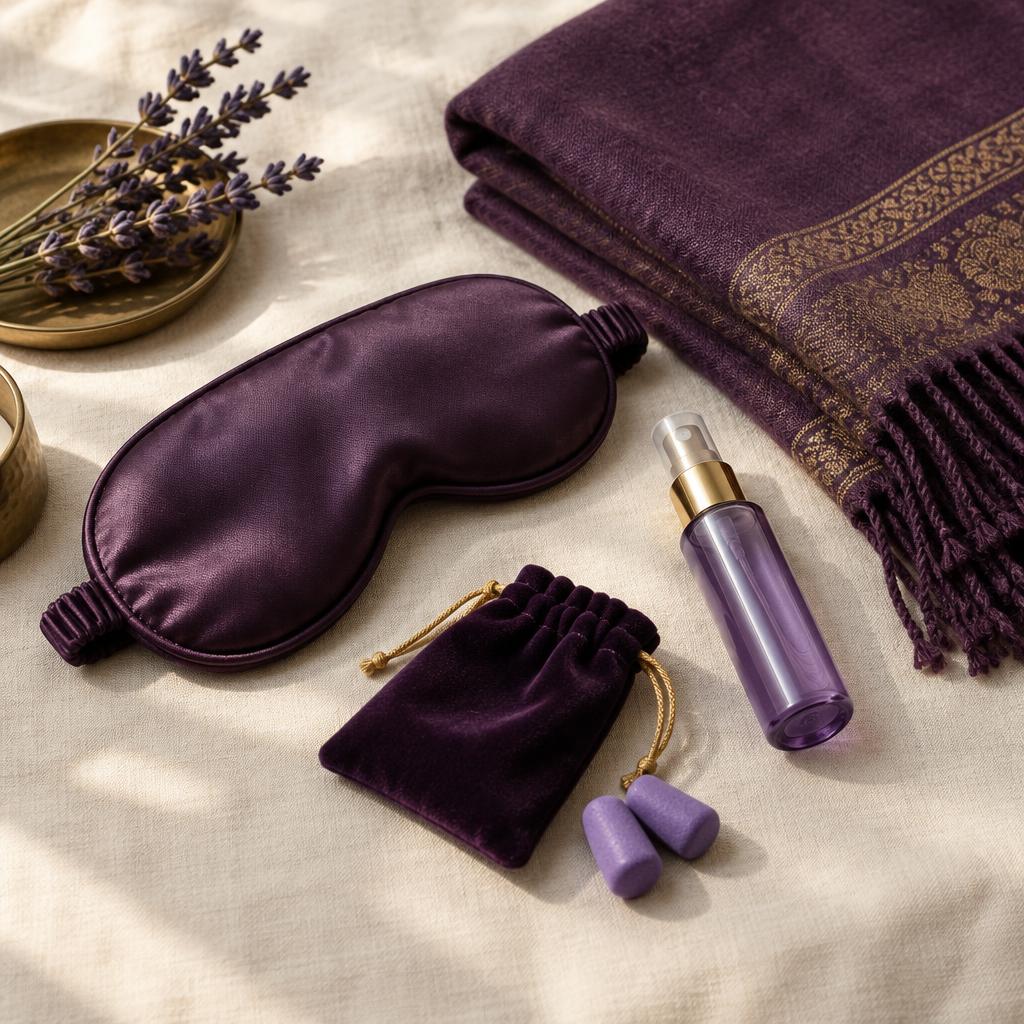
Experienced travellers don't sleep well away from home because they're lucky. They sleep well because they carry a small, deliberate kit that removes the usual disruptions: light, noise, unfamiliarity, and temperature. Everything below fits in one packing cube — and earns its space many times over.
The non-negotiables
- A proper eye mask — contoured, so it blocks light without pressing on your eyelids. The single highest-value item on this list.
- Earplugs you have actually tested at home. Foam for silence, silicone for comfort; the wrong pair is worse than none.
- Your own pillowcase. Familiar feel and scent, and it slips over any hotel pillow in seconds.
- A pre-bed scent you already use at home — a roll-on or pillow mist. Smell is the fastest conditioned sleep cue you can pack.
The problem-solvers
- A white noise app or small travel speaker — masks corridor doors, traffic, and unfamiliar plumbing.
- A large scarf or pashmina — blanket on cold flights, curtain-gap blocker, impromptu eye shade.
- Electrolytes or simply a plan to drink water steadily — travel dehydration is a quiet, reliable sleep wrecker.
- A pair of warm socks. Warm feet speed the body-temperature drop that triggers sleep onset, whether you're at 35,000 feet or in an over-air-conditioned room.
What to leave out
Resist the melatonin gummies 'just in case' unless you already use them deliberately and sparingly — grogginess at the wrong time zone can set adjustment back a day. The same goes for nightcap miniatures: alcohol sedates but fragments, and fragmented sleep in a new place is the worst of both worlds.
"Pack for sleep the way you pack for weather: assume the room will get it wrong, and you'll be right often enough to be glad you did."
One more thing that isn't a thing
The most portable item isn't an object: it's your wind-down order. Doing the same last twenty minutes as home — wash, scent, a few pages, lights out — gives your brain a sequence it already trusts. Objects support the ritual; the ritual is the technology.