
Road Trips and Rest: Why Drowsy Driving Is the Real Itinerary Risk
Driving tired impairs reactions like alcohol does. How to plan driving days around your body's clock — and when to pull over.
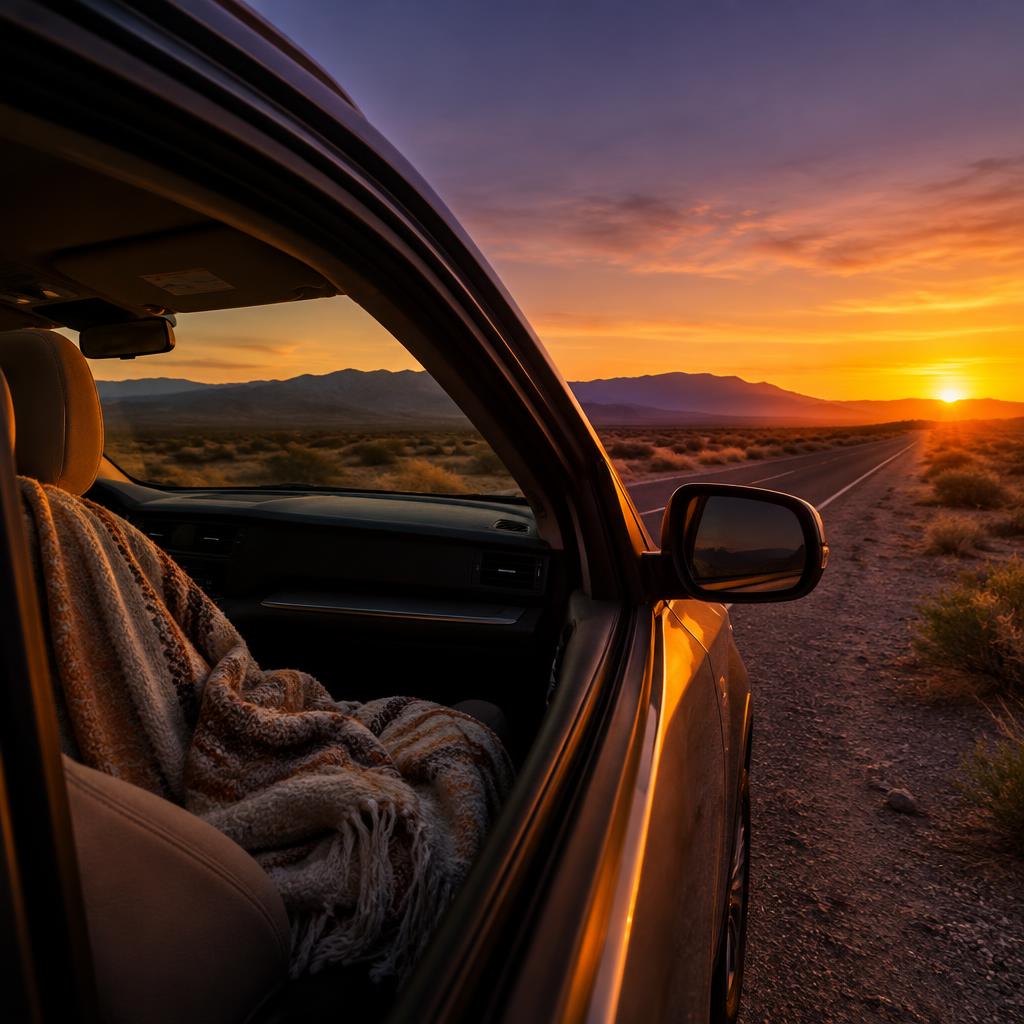
Every road-trip guide tells you where to stop for the view. Almost none mention the most important stop: the one where you close your eyes. Drowsy driving is chronically underestimated — after seventeen to nineteen hours awake, reaction times resemble those of a driver over the legal alcohol limit. The open road feels relaxing; physiologically, long monotonous driving is one of the most sleep-pressure-building activities there is.
Plan around your clock, not the map
Your body has two predictable daily dips: the early hours of the morning (roughly 2–6 a.m.) and the post-lunch trough (roughly 1–3 p.m.). These are the windows where microsleeps happen — seconds-long lapses you may not even notice. The simple fix is scheduling: start after a proper night's sleep, do the longest stretches in the morning, and treat early afternoon as lunch-and-walk time rather than push-through time.
The only two things that work
Windows down, loud music, singing along — none of these meaningfully fight sleepiness; they just mask how impaired you are. The two countermeasures with real evidence are caffeine and naps, ideally combined: drink a coffee, then take a fifteen-to-twenty-minute nap in a safe, parked spot. The caffeine arrives just as you wake, and the combination outperforms either alone. Then — crucially — that's a bridge to your next real stop, not permission to drive all night.
- Share the wheel when you can; swap at the first yawns, not the tenth.
- Never 'push the last two hours' overnight — that's when the risk is highest and the roads are emptiest.
- Treat heavy eyelids, lane drifting, or missing a turn as a stop signal, immediately. Not at the next town.
"The itinerary is flexible. Your reaction time is not. Plan the driving around sleep, never the other way around."
Protect the nights between driving days
Road trips quietly erode sleep: late arrivals, unfamiliar motels, early starts to 'beat the traffic'. Guard the nights the way you'd guard a flight connection — arrive before a real bedtime, keep the room dark and cool, and don't stack more than two or three long driving days in a row without a lighter one. The trip you remember is the one you were awake for.