
Pets in the Bedroom: Friend or Foe for Your Sleep?
A warm dog at your feet can be soothing. A cat that wakes at 4 a.m. is not. How to share a bed without giving up your nights.
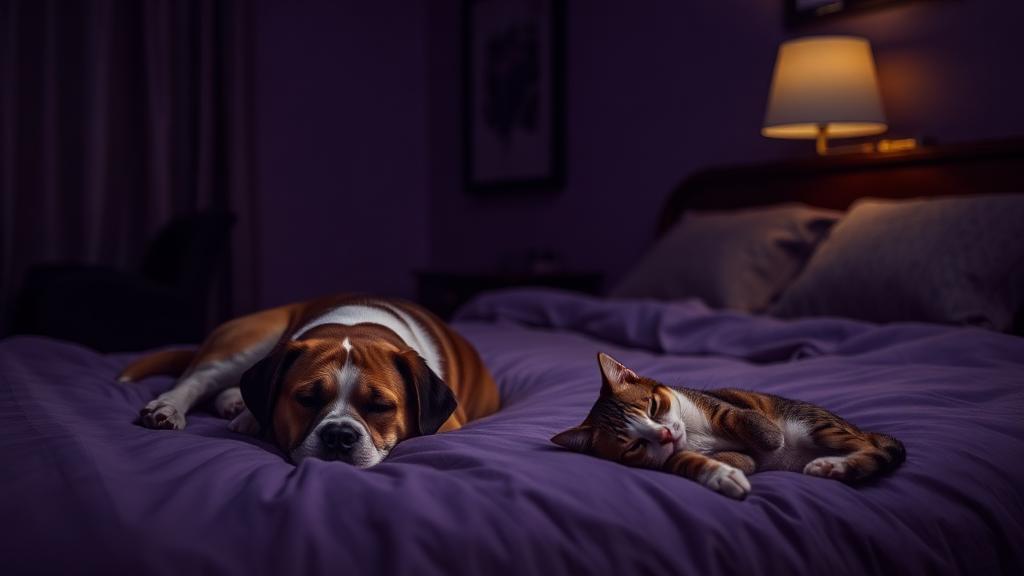
Whether a pet helps or harms sleep is almost entirely a question of which pet, and where it sleeps. The research is genuinely mixed — and that is because a calm older dog at the foot of the bed and a young cat that paces at dawn are entirely different sleep environments.
When pets help
For many people, the presence of a familiar animal lowers nighttime anxiety and provides a sense of safety that eases the transition into sleep. The warmth and steady breathing of a calm pet can be genuinely settling, particularly for people who sleep alone.
When pets harm
- Animals that move, groom, or reposition frequently cause micro-arousals you may not remember but that fragment deep sleep.
- Cats are crepuscular — most active at dawn and dusk — so a free-roaming cat is a leading cause of 4–5 a.m. wake-ups.
- Pet dander and warmth can raise the bedroom temperature and trigger allergies, both of which degrade sleep quality.
"The question is not whether your pet sleeps with you. It is whether you wake rested."
A simple test
Try a week with the pet out of the bedroom and a week with them in. Compare not how you feel about it emotionally, but how you feel in the morning and whether you wake in the night. The data, not the sentiment, should decide.