
Eating for Sleep: The Dinner Decisions That Quiet the Brain
The right meal at the right time supports melatonin, GABA, and stable blood sugar. The wrong one turns digestion into a rival for rest.
Daniel, Somnia Editor 6 min
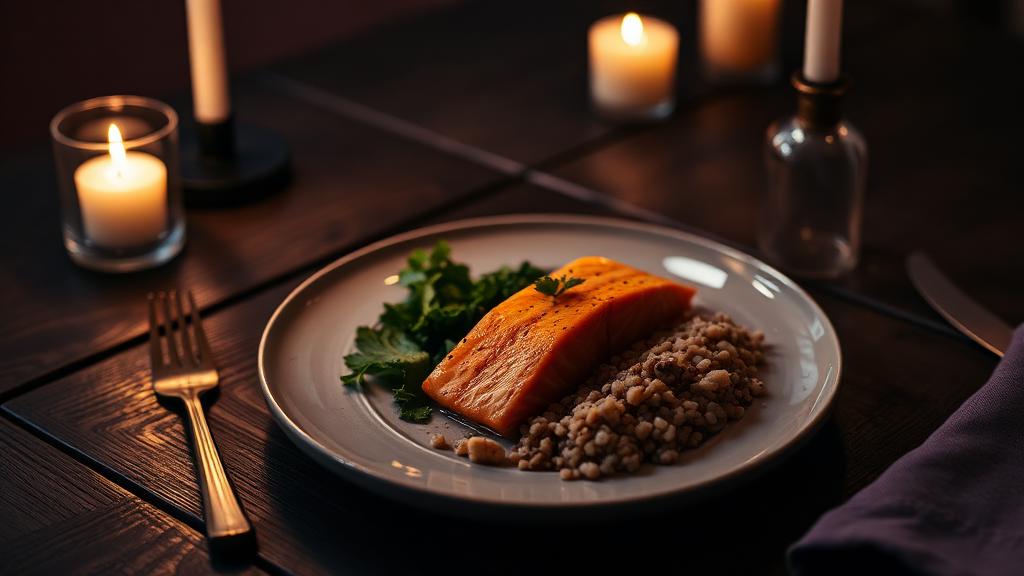
Sleep is not just a brain event; it is a whole-body process. What you eat in the last six hours of the day can either help the nervous system descend into sleep or keep it running a second shift in the gut.
What helps sleep
- Tryptophan-rich foods — turkey, eggs, tofu, pumpkin seeds — provide the amino acid the brain uses to make serotonin and melatonin.
- Magnesium from leafy greens, nuts and legumes supports GABA, the calming neurotransmitter.
- Complex carbohydrates in moderation help tryptophan cross the blood-brain barrier.
- Kiwifruit and tart cherry have small but consistent evidence for improving sleep onset and quality.
What harms sleep
- Large, fatty meals within three hours of bed force the gut to work overnight and raise core temperature.
- Spicy foods can trigger reflux when lying flat.
- Sugar and refined carbs cause a glucose spike followed by a reactive crash that can wake you at 3 a.m.
- Late caffeine lingers: its half-life is five to six hours in most adults.
The simple rule
Finish your main meal two to three hours before bed. If you need a late snack, make it small, protein-led, and low in sugar. Your sleep will repay the discipline.