
The Family Bedtime Routine: Why Kids Sleep Better When the Night Is Predictable
Children don't fall asleep because they're tired — they fall asleep because the routine tells them to. How to build a family wind-down that actually works.
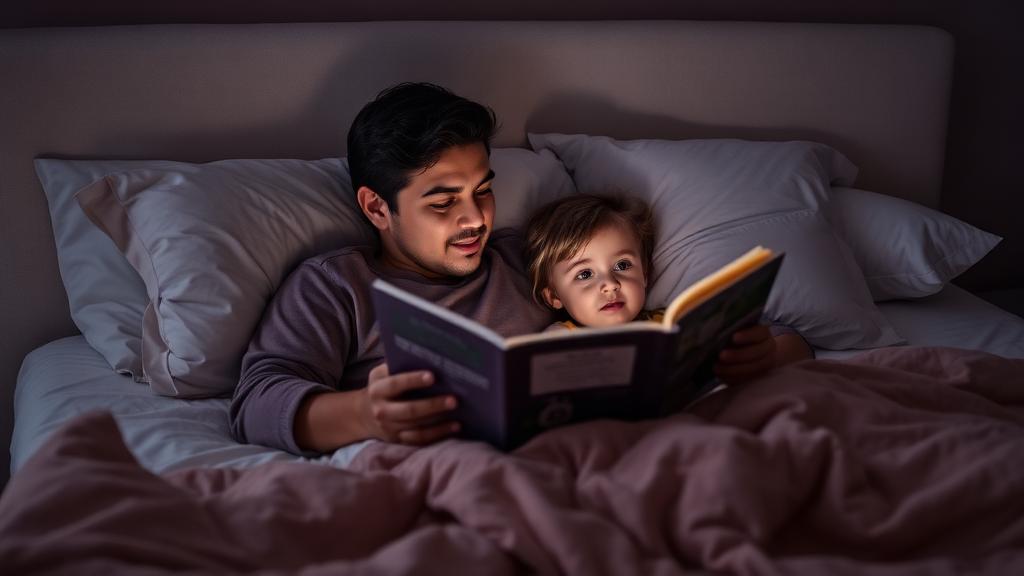
Ask any parent what the hardest part of the day is and many will say the same thing: bedtime. Yet the science is consistent — children with a regular bedtime routine fall asleep faster, wake less at night, and sleep longer overall. The routine isn't a nice extra. It is the mechanism.
Why predictability beats tiredness
A child's brain can't tell time, but it reads sequences brilliantly. Bath, pyjamas, teeth, story, lights out — repeated in the same order, this chain becomes a conditioned sleep cue. After a few weeks, the bath itself starts lowering arousal. Skip steps or shuffle the order and you lose the conditioning you've built.
The five rules of a routine that works
- Same start time, seven days a week — weekend drift of more than an hour shows up as Monday-morning battles.
- Screens off at least an hour before the routine begins; the light and the stimulation both work against you.
- Dim the whole house, not just the child's room — ambient light tells the family clock it's still day.
- Keep the routine short: 20–40 minutes. Long routines invite negotiation and delay tactics.
- End in the child's own bed, drowsy but awake — so they learn to fall asleep without you in the room.
"A bedtime routine isn't about getting a child to sleep tonight. It's about teaching them to fall asleep for life."
What to do when it breaks
Travel, illness and growth spurts will break the routine — that's normal. The fix is boring: restart it the next night, exactly as before, without ceremony. Routines recover fast when parents don't renegotiate them. And if bedtime battles persist for months despite a consistent routine, it's worth looking at total sleep needs for your child's age — an overtired child fights sleep harder, not less.