
The Caffeine Math: Why Your 3 p.m. Coffee Is Still in Your System at Midnight
Caffeine's half-life is longer than most people realise. A practical guide to the last-coffee deadline that protects your deep sleep.
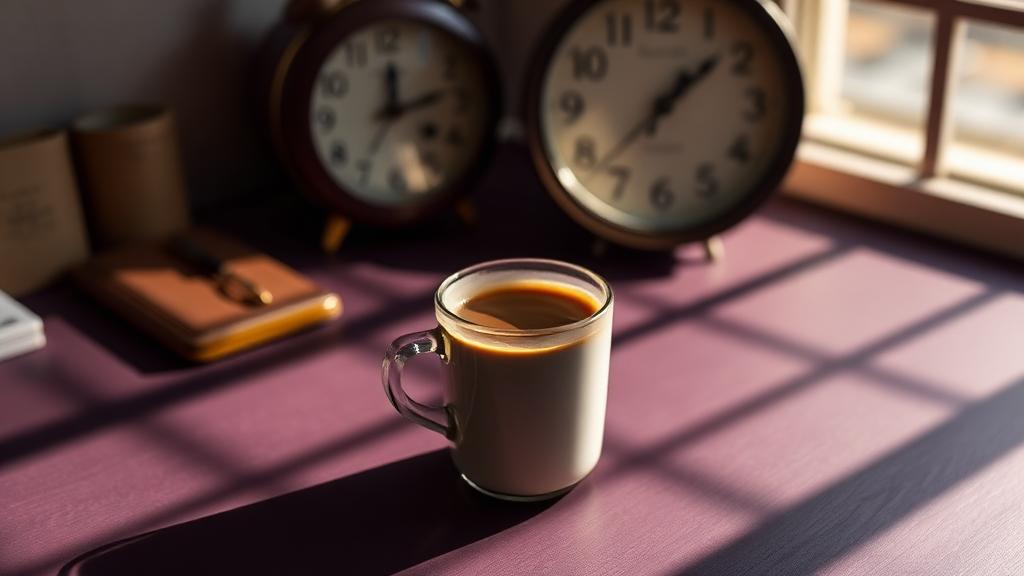
Caffeine has a half-life of roughly five to six hours in a healthy adult — meaning half of your 3 p.m. flat white is still circulating at 9 p.m., and a quarter at 2 a.m. That residual dose is enough to suppress slow-wave sleep without you ever feeling 'wired'.
Why you sleep but don't rest
Caffeine binds to adenosine receptors — the molecules that signal sleep pressure. Even small concentrations during the night reduce deep sleep by up to 20%. You'll still fall asleep, but you'll wake unrefreshed.
The 2 p.m. rule
For most adults, no caffeine after 14:00 keeps overnight levels below the threshold that disrupts architecture. Slow metabolisers — roughly half the population — should stop by noon.
Hidden sources
- Decaf coffee — still contains 5–15 mg per cup.
- Green tea taken after dinner.
- Dark chocolate (a 70% bar can hold 40–80 mg).
- Pre-workout powders and 'energy' sparkling waters.
If you cannot imagine giving up the afternoon coffee, swap it for one with milk and protein — the slower absorption blunts the late-night tail.