
Working From Home Without Losing Your Nights
When the office is the bedroom, the day never really ends. How to rebuild the boundaries that let your brain clock off and sleep on time.
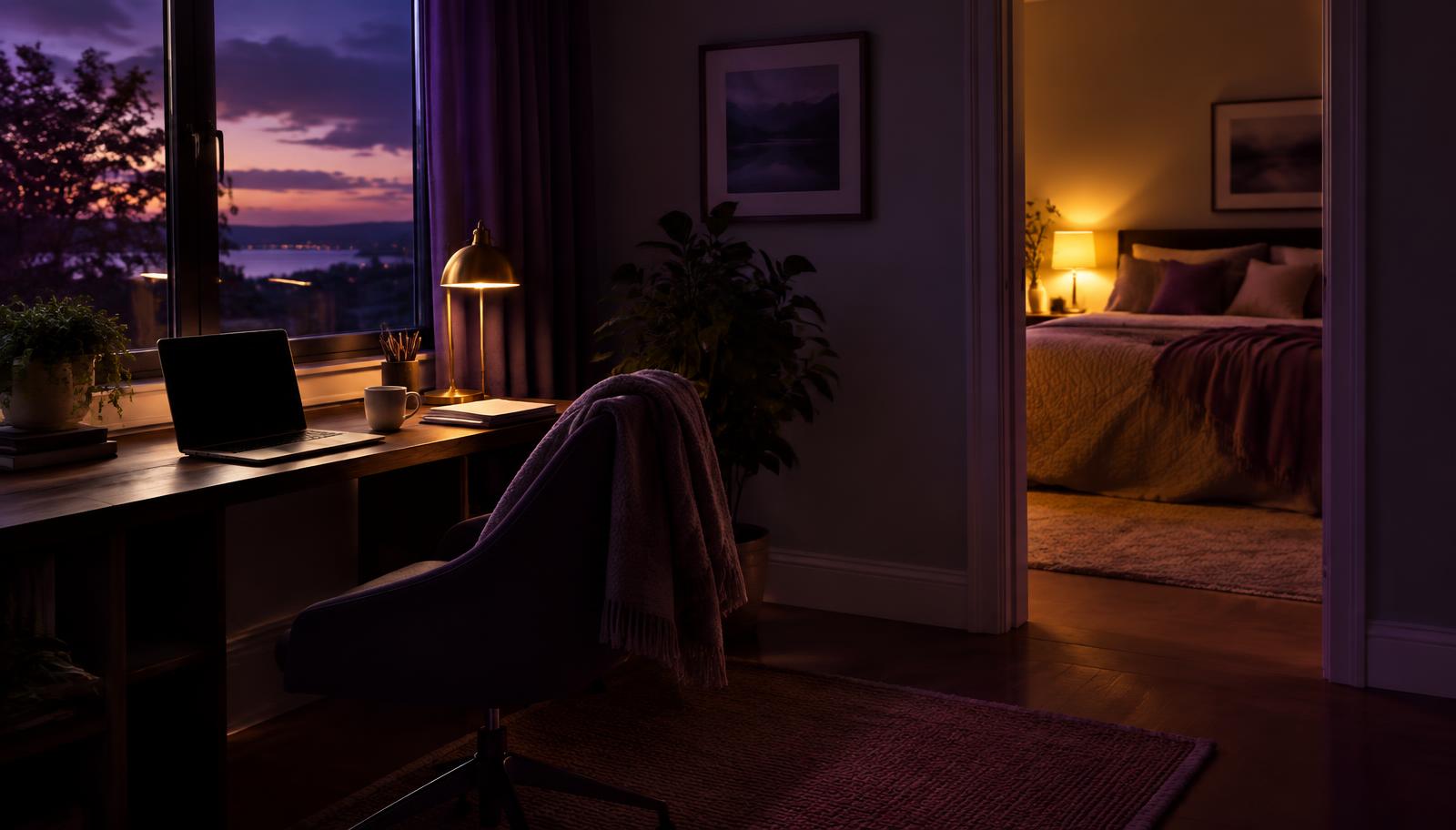
Working from home removed the commute, and with it the one stretch of the day that reliably separated work from rest. Without that buffer, the laptop closes at 19:40 and the nervous system is still in meeting mode at midnight. The fix is not discipline; it is designing a new boundary to replace the one the commute used to provide.
Build a fake commute
Fifteen to twenty minutes of walking, ideally outdoors, at the end of the working day does two useful things: it gives your brain a physical signal that work has ended, and the evening light exposure helps steady your body clock. If walking isn't possible, a shower, a change of clothes and a tidied desk can do a version of the same job.
Keep the bedroom out of the job
- Avoid working from bed; the brain learns that the bed is a place for alertness.
- If the desk must live in the bedroom, cover or turn away the screen at the end of the day.
- Charge work devices in another room so a late notification cannot pull you back in.
- Set a hard stop time and let a calendar reminder enforce it rather than your willpower.
"Your brain doesn't recognise the end of a working day. It recognises the ritual you attach to it."
Protect the middle of the day too
Home workers often get remarkably little daylight. Take one meeting on the phone outdoors, eat lunch near a window, or step outside mid-morning. Bright light early makes melatonin rise on time later — a fifteen-minute habit that quietly improves the night.
When the pattern persists
If you have kept a stable stop time and outdoor light for three weeks and still lie awake past an hour most nights, that is chronic insomnia territory rather than a scheduling problem. Structured CBT-I is the evidence-based next step and works well remotely.