
How to Sleep Well When You Travel: A Carry-On Guide
Hotel rooms, red-eyes and unfamiliar beds don't have to wreck your sleep. A practical protocol for sleeping well anywhere.
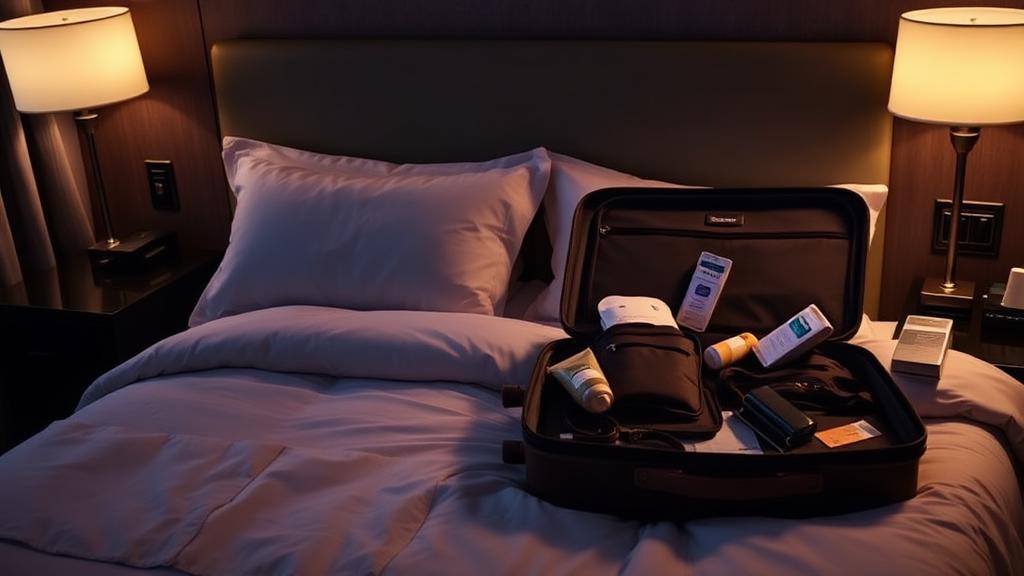
The first night in a new place is almost always lighter and shorter. Sleep scientists call it the first-night effect: one half of your brain stays slightly more alert in unfamiliar surroundings, a leftover from sleeping in genuinely risky environments. You can't delete the reflex — but you can shrink it to nearly nothing.
Recreate the signals, not the room
Your brain falls asleep to cues, not square footage. Darkness, cool air, familiar scent, and a predictable wind-down sequence are portable. An eye mask, earplugs and your own pillowcase take up less space than a pair of shoes and do more for your night than an upgrade ever will.
- Cool the room to 18–19 °C the moment you arrive — hotel rooms almost always run warm.
- Use your normal wind-down in the right order, even if compressed to 15 minutes.
- Bring a familiar scent (a travel pillow mist works) — smell is a surprisingly strong sleep cue.
- Blackout matters more than view: mask the LED dots on TVs and alarms.
Red-eyes and arrival days
On overnight flights, decide in advance whether you're trying to sleep on the plane or staying up and crashing on arrival — both half-work if you improvise. If the flight lands in the morning at your destination, sleep on board; if it lands at night, resist the nap and let local bedtime do the resetting.
"You don't need your bedroom to sleep well. You need your signals."
The two-night rule
Whatever happens on night one, protect night two: same local bedtime, morning light, no caffeine after 2 p.m. Almost everyone sleeps deeply the second night in a new place — the brain has signed off the location as safe.