
The Minimalist Bedroom: Why Less Helps You Sleep More
Visual clutter is cognitive clutter. How stripping your bedroom back to essentials lowers nighttime arousal and makes sleep the room's only job.
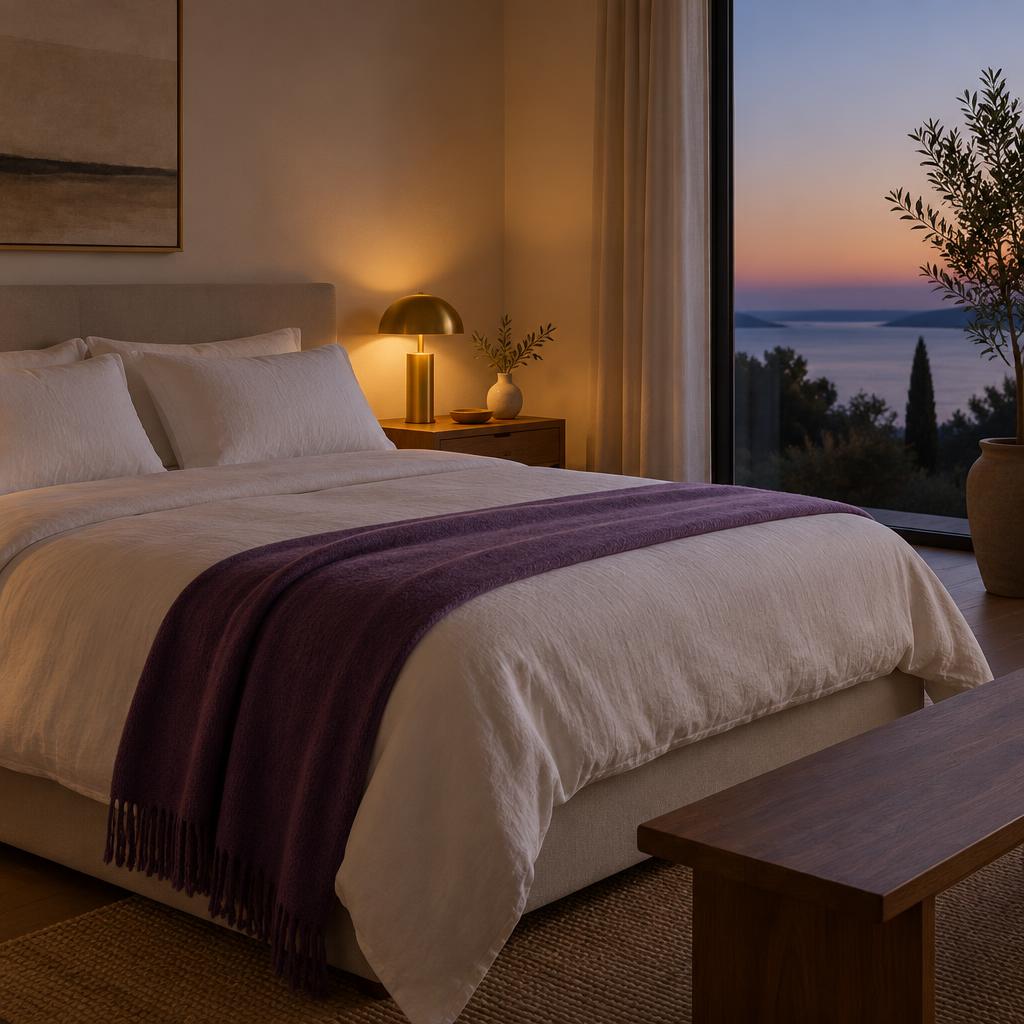
Walk into your bedroom tonight and count how many things are competing for your attention. The chair carrying three days of clothes. The glowing charger. The stack of books you keep meaning to read. Each object is a small, silent instruction to your brain: do something. A room full of instructions is a hard room to fall asleep in.
The brain notices what the eye skips
You stop consciously seeing clutter within days — that's habituation. But your visual cortex doesn't stop processing it. Studies of home environments consistently link cluttered bedrooms with higher self-reported stress and worse sleep, and the mechanism is straightforward: an untidy, multi-purpose room keeps the brain in a low-grade state of unfinished business. Sleep needs the opposite — a clear signal that nothing is required of you now.
One room, one job
Sleep clinicians talk about stimulus control: the bed should mean sleep, full stop. The minimalist bedroom is stimulus control applied to the whole room. When the space contains only what supports rest — a bed, soft light, perhaps one calming object — the room itself becomes a cue. Over weeks, that cue does real work: you walk in, and your nervous system starts downshifting before you've touched the pillow.
Where to start tonight
- Clear every horizontal surface except the bedside tables — floors, dressers, the infamous chair.
- Remove or cover standby lights; even small LEDs register through closed eyelids.
- Take work out of the room entirely: laptop, paperwork, anything tied to tomorrow's to-do list.
- Choose one warm light source and commit to it as the only evening lighting in the room.
- Keep one beautiful, calming object — a plant, a lamp, a piece of art — rather than ten average ones.
"A bedroom should ask nothing of you. The moment it does, it stops being a place to rest."
Minimal doesn't mean cold
This isn't an argument for a sterile white box. Texture, warmth and one or two colours you love make a room feel like yours — and feeling safe and at home is itself sleep-promoting. The test isn't how little the room contains. It's whether everything in it either supports sleep or quietly gets out of its way.